Executive Summary

In a world increasingly dependent on power, Neunucleus introduces a transformative energy ecosystem designed to make AI-driven, renewable energy the industrial default. As Asia-Pacific, especially Southeast Asia and other emerging markets experience exponential industrial and digital growth, Neunucleus offers a breakthrough: the Neunucleus Energy System (NES), a proprietary AI-integrated energy solution that combines solar generation, intelligent power storage, and seamless source-switching for unmatched performance, cost savings, and ecological benefit.
We target heavy industrial users, export-oriented manufacturers, economic zones, and smart infrastructure developers who seek an energy system that is predictive, flexible, and future-proof—allowing them to achieve energy independence while realising higher returns on sustainability investments.
Product Introduction: The Neunucleus Energy System (NES)
- AI-Driven Predictive Energy Engine: Continuously forecasts usage patterns and adjusts supply flows in real time.
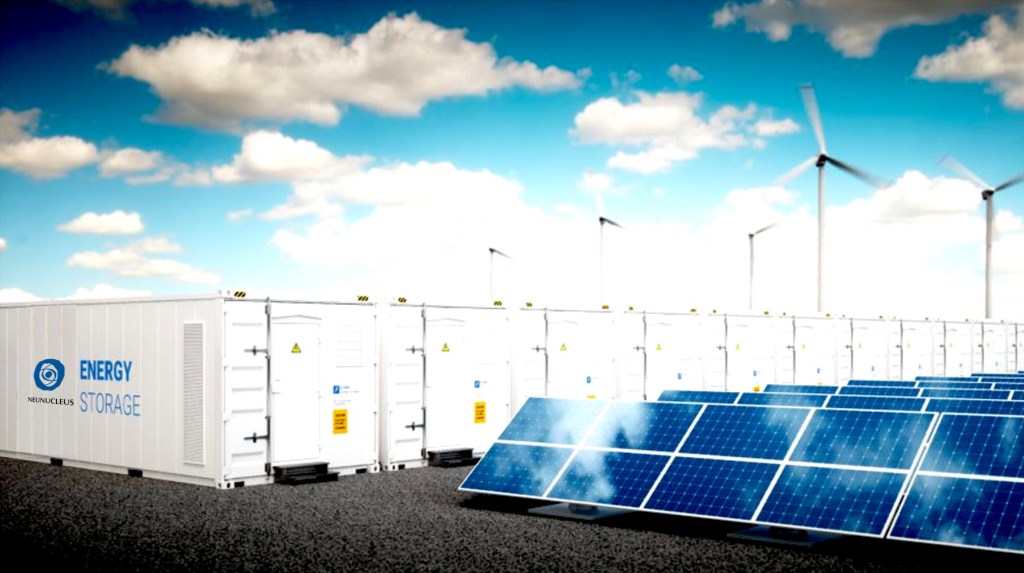
- Solar + Energy Storage Infrastructure: High-efficiency panels combined with industrial-grade storage, ensuring 24/7 clean power availability.
- Smart Energy Switching: Automatically alternates between solar, grid, kinetic or other renewable sources based on usage loads and cost-benefit thresholds.
- Energy Management Interface: Visual dashboards and mobile-access tools to monitor savings, CO₂ reductions, and real-time performance.
- Plug-and-Play Retrofit Ready: Designed to integrate with legacy infrastructure or new industrial builds.
Industrial Energy Outlook: 2025–2050
2025–2035: The Decade of Transition
- Global shift towards ESG compliance and carbon neutrality commitments will force industries to overhaul their energy systems.
- Southeast Asia will emerge as a green manufacturing hub, demanding resilient, localised power infrastructure.
- Rising fossil fuel volatility and grid instability will accelerate adoption of solar + storage solutions, especially for off-grid or hybrid-grid zones.
- AI and IoT convergence will push energy automation from luxury to necessity.
Neunucleus Response: A full suite rollout of Neunucleus Energy Systems (NES) targeting industrial clusters, export zones, and special economic areas in China, Malaysia, Indonesia, Vietnam, Thailand, and the Philippines.
2035–2050: The Era of Energy Abundance
- Energy production becomes post-scarcity for most industrial users who adopt predictive renewables as their first-tier energy.
- AI microgrids, blockchain-led energy trading, and peer-to-peer energy networks become the new economic frontier.
- Governments enforce renewable-mandate zones, banning carbon-first energy in industrial areas.
- Grid-connected users will become grid-optional, switching fully to self-sustaining energy ecosystems.
Neunucleus Roadmap:
- Expand into industrial-scale kinetic and wave energy hybrid systems.
- Establish regional energy cooperatives owned by industrial communities.
- Lead in AI-licensed energy prediction IP and cross-border clean-energy financing.
Conclusion
Neunucleus is not just a product—it’s a movement to decentralise, democratise, and revolutionise energy as a force for economic liberation. Through AI-enabled, renewable-first solutions, we enable Southeast Asia and other emerging markets to leapfrog traditional infrastructure—powering a more prosperous, equitable, and sustainable future.
Case Studies: Neunucleus Energy System (NES) Deployment
Neunucleus Energy System (NES) is ideally suited for industrial applications in China, Malaysia, Indonesia, Vietnam, Thailand, and the Philippines, particularly in sectors with recurring high electricity consumption—such as semiconductor assembly, manufacturing, and concession-based logistics. Typical monthly electricity usage ranges from US$10,000 to US$200,000, with an effective investment lifespan of minimum 5 years, up to 7 to 10 years to realise optimal ROI.
Product Plans & Financing Models
Neunucleus offers two core product plans:
- Long-Lease Model (LLM)
- Lease-to-Own Model (LOM)
Energy Cost Savings Projection:
| Timeframe | Estimated Energy Cost Savings |
|---|---|
| Month 1 | 30% |
| Year 7 onward | 50% |
| Year 10 onward | 70% |
Financing Options (8 years Plan):
| Plan Type | Down Payment | Interest Rate | Savings |
|---|---|---|---|
| Zero-interest plan | 50% | 0% | Y1 30%, Y7 50%, Y10 70% |
| Standard Plan | 30% | 4% | Adjusted |
| Long-Lease Plan | 15% | 6% | Adjusted |
| Zero Down Plan* | 0% | 8% | Adjusted |
*Zero down plan is available for system implementation applies to industries with qualified cash flow collateral and credit ratings only. Land or premise provided by customer. Solution does not include conventional grid connectivity (if required) for back up or alternative power supply. Standard insurance, one-month lease, and two-months security deposit apply.
Case Study 1: Rooftop Solar for Light Industry
| Description | Data |
|---|---|
| Facility Size | 12 acres (light industry) |
| Rooftop Solar Coverage | 2.3 acres (1.1 MWh energy) |
| Average Monthly Electricity Usage | US$30,000 |
| Initial Monthly Savings (30%) | US$10,000 |
| Year 7 Savings (50%) | US$15,000 |
| Year 10 Savings (70%) | US$21,000 |
| System Type | NES + Neunucleus Solar + Energy Storage |
Case Study 2: Electric Logistic Solution
| Category | Diesel Truck (200 units) | Electric Truck + Neunucleus Energy System |
|---|---|---|
| CapEx (Truck Fleet) | US$25,000,000 | US$32,500,000 |
| Fuel / Energy Cost (5 years) | US$37,500,000 | US$10,000,000 (maintenance) |
| NES + Solar + Energy Storage | – | US$10,000,000 (20% Down Plan) |
| Total 5-Year Cost | US$62,500,000 | US$47,500,000 |
| Total 10-Year Cost | US$100,000,000 | US$57,500,000 |
| Cost Savings (5 Years) | – | 24% savings |
| Cost Savings (10 Years) | – | 42.5% savings |
Operational Details:
- 200 electric 12-wheeler trucks
- Each truck hauls 45-50 MT of dry bulks
- 60km one-way haul road (2 trips daily = 240km/day)
Conclusion:
Neunucleus Energy System (NES) demonstrates significant long-term savings, improved energy independence, and reduced environmental impact for high-energy industrial operations—whether in fixed facilities or mobile logistics like mining.
Get in touch with us for your energy needs.
 Neunucleus Energy Corp